TALK · 2026 · MT 13:44–46
The treasure and the pearl
Two parables about the kingdom of God — and about why it's worth everything.
44 The kingdom of heaven is like treasure hidden in a field, which a man found and covered up. Then in his joy he goes and sells all that he has and buys that field. 45 Again, the kingdom of heaven is like a merchant in search of fine pearls, 46 who, on finding one pearl of great value, went and sold all that he had and bought it.
Matthew 13:44–46

For the children
- Kids, come and sit here in the front row so you're all in the same position.
- The main reason I'm doing the children's talk today is that we grown-ups often need to learn from you.
- First I'll tell you a story.
Parable: The boy and the tree
Parables are like this: a boy was playing in a sandpit under a big tree. At noon he got hungry. All around him there were heaps of grains of sand. But even if you pat sand into a golden little sand cake, you don't really feel like eating it. From the tree, though, little green balls had dropped into the sand — they looked a bit like Smarties.
What do you think the little guy did, kids? That's reeeally dangerous. But the boy probably didn't know that, or he couldn't help himself. Either way, he really did pop one in his mouth. It didn't taste of much on the tongue, and it didn't fill his tummy much either… At least not right away…
A few weeks later it was time for the usual regular check-up at the doctor's. Don't worry, the boy was thriving, but his parents couldn't quite let it go and confided in the doctor that there was, after all, something a little odd about their son. He walks as straight as a ruler, he's always drinking water, birds land on him outside, and his poos looked like acorns.
A whole series of tests was done, including an X-ray. When the doctors looked at the picture, they couldn't believe their eyes. A seed had sprouted in the boy's tummy. The seed he'd swallowed back then in the playground. And it was doing very well in his tummy — it had grown into a small, straight, springy little tree.
…
And that really happened.
…
It often happened when Jesus told parables.

Interpretation
- Most of his listeners gobbled up his stories like Smarties — because everyone wants to hear a story through to the end, even someone who actually had no wish to learn anything from Jesus.
- And the magic of a short story like that is that you don't just forget it — so everyone took it home with them.
- Some surely passed it on to their neighbours as a riddle and puzzled over it together.
- And when you carry a story around inside you like that and it won't let you sleep, it may happen that even a somewhat hardened heart eventually catches on and lets the seed grow in it.
- And those who really didn't want it passed it out the natural way — and which way is that? They simply forgot the story.

Experiment
- Let's do an experiment and a practical demonstration here. First I'll read a two-sentence parable:
The kingdom of heaven is like treasure hidden in a field, which a man found and covered up. Then in his joy he goes and sells all that he has and buys that field.
Matthew 13:44
- Ideally, the parable worked like this: “Kids — behind that table there's a bag of chocolate coins — anyone who wants it can go and take it.”
- Yes — that's how it's supposed to look — that's how the grown-ups should have reacted to the parable too — they should have started searching straight away and asking where the treasure is.
- But we grown-ups often aren't as brave and quick as children — so it's a good thing we can at least remember the parable and take it home with us.
For the seekers
- For those who feel like searching, I have a second story:
Again, the kingdom of heaven is like a merchant in search of fine pearls, who, on finding one pearl of great value, went and sold all that he had and bought it.
Matthew 13:45–46
- Kids, after this search you can just stay on in Sunday school — no need to come back, okay?
- OK — so get ready: there are pearls like these in Sunday school. Off you go and find them!

For the grown-ups
At the cottage
- For those who are terrified to see me in the pulpit: the text of my sermon has 2100 words, and the AI assured me I could get through it in 22 minutes. That's partly because I quietly shifted part of it into the children's talk. But shhh.
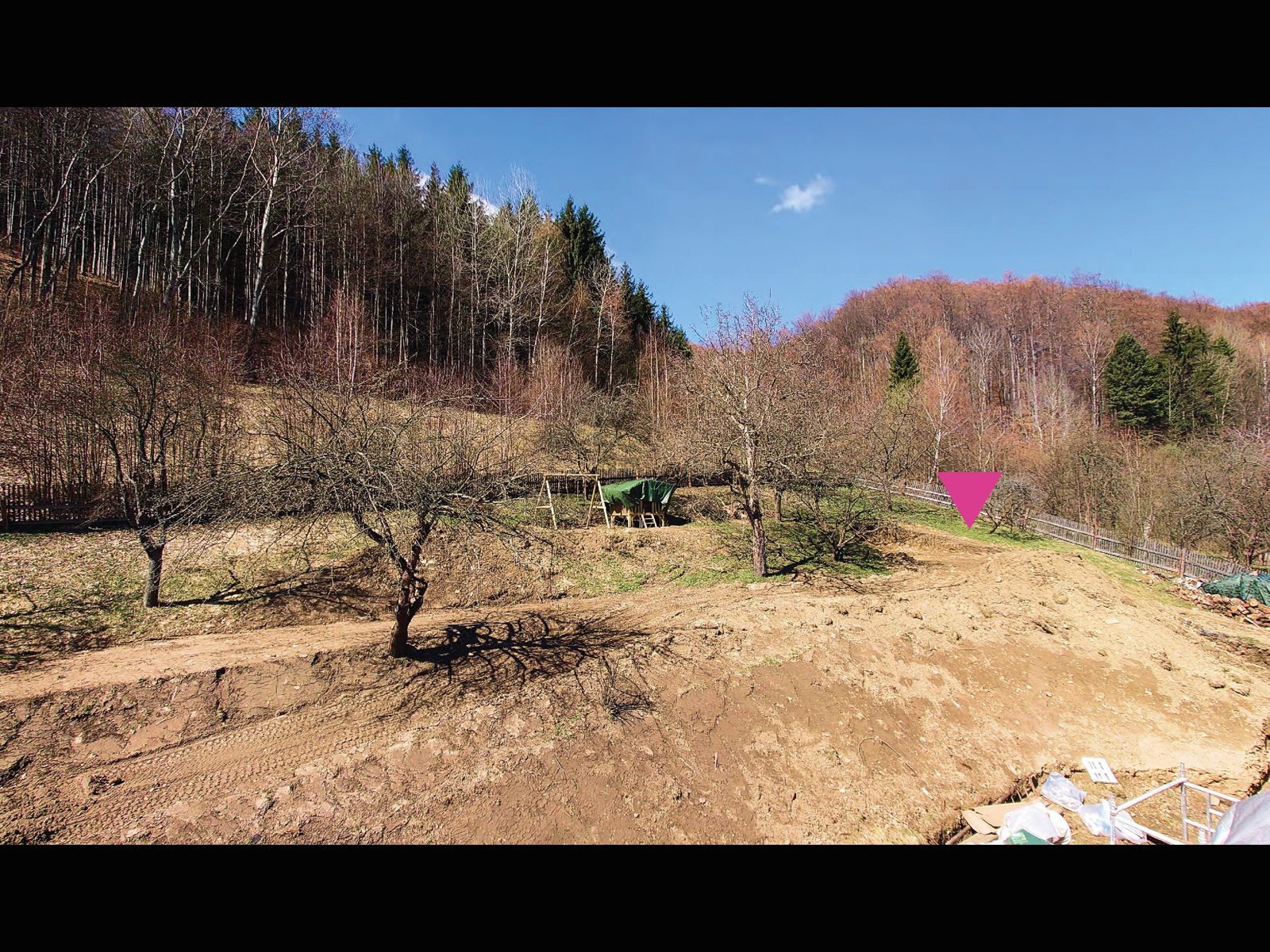
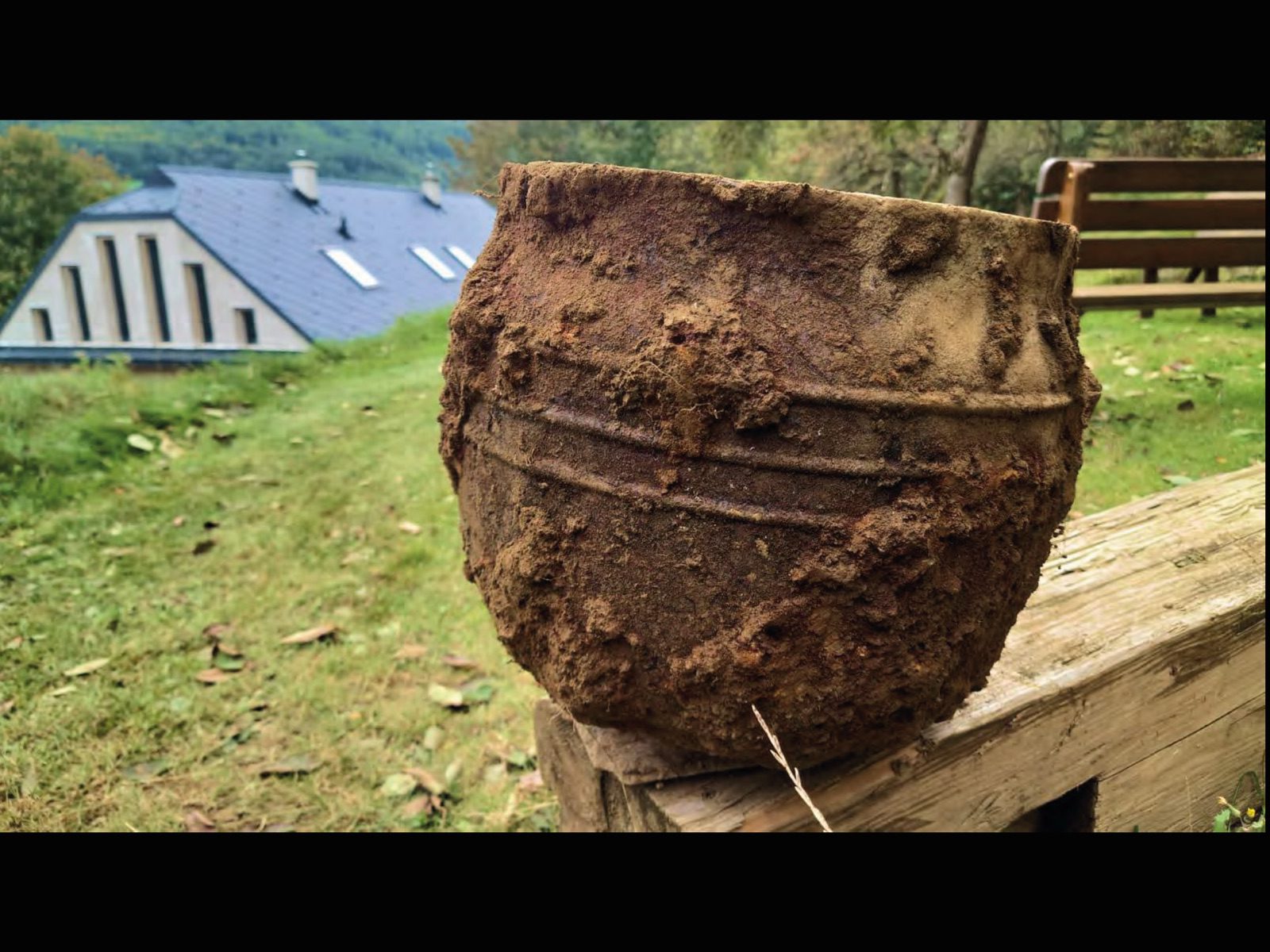
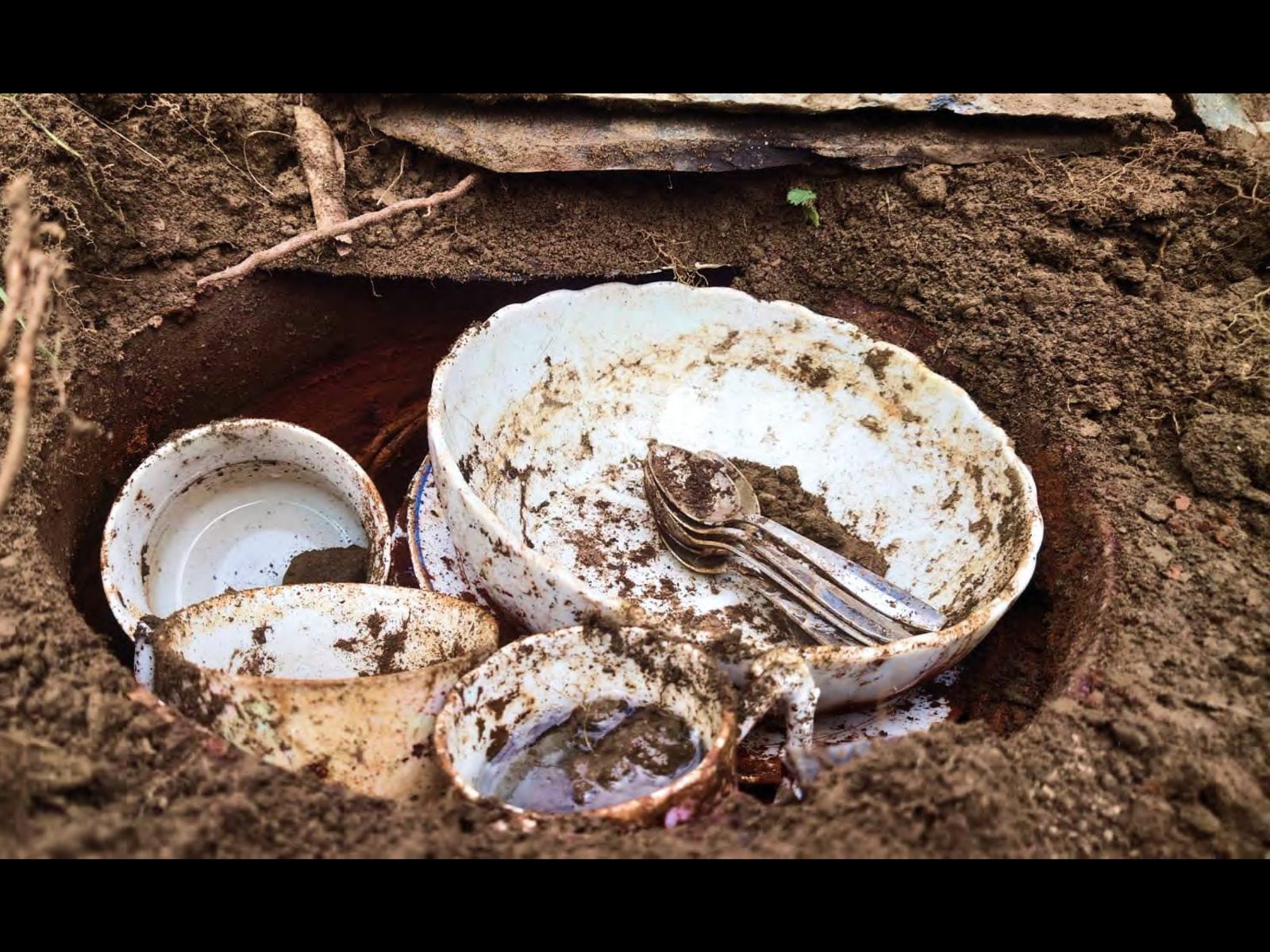
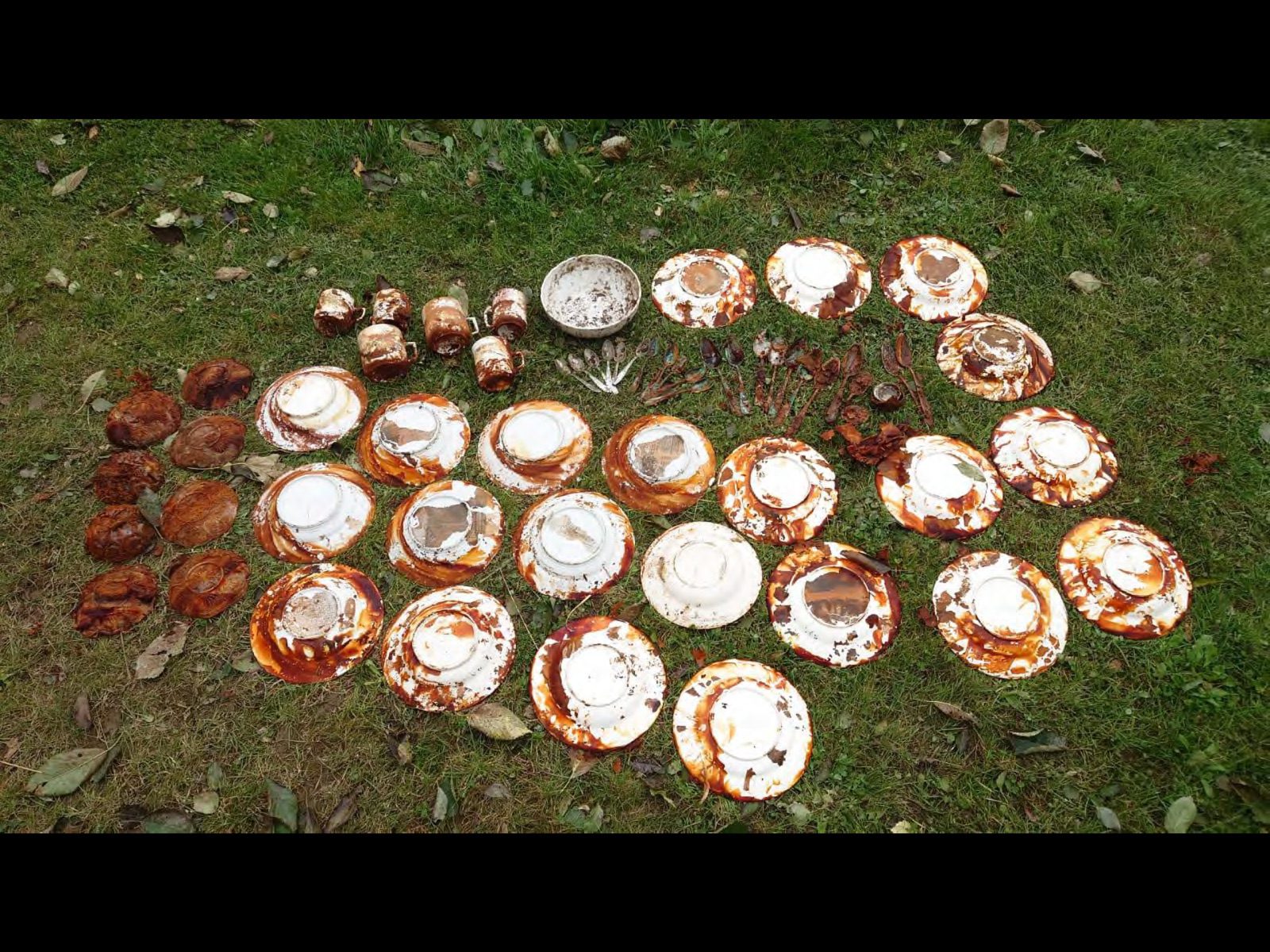
- A digger driver dug up our whole garden at the cottage and didn't find any treasure. And then I went to work and dig myself — and on one of the last undug patches I discovered a treasure!
- Many of those listening to Jesus' parables also had treasure buried in their field — probably as many hands would go up as here if we asked who has a savings account. And it did happen that, say, the neighbour next door's dad passed away and never told anyone exactly where he'd buried his savings.
- Then it can happen that a hired labourer is ploughing someone else's field for a day's wage. The plough catches on something hard — he digs it out, but he doesn't want to steal, and the field isn't his.
- Now we know that Jesus' story really is taken from everyday life.
A million questions
But I have a million more questions about it. I'll say a few of them out loud so you can say: “that's my question” — and then, during the exposition, go and look for the answer to it in what I say. If need be, take it home with you and keep digging, keep asking.
- “of heaven” — So is it far away? Far away in space? Or far away in time? Or even further — only after death?
- “kingdom” — That sounds a bit like a fairy tale. A dream world. Is it real? What exactly does it look like and how does it work? Where is the king?
- “a man” — What man? Does it mean someone specific? Jesus, perhaps? Or is it absolutely anyone? Or is it only for some chosen few? Am I too sinful for it to apply to me? Is this text only about unbelievers, or does it apply to me, a believer of many years?
- “found” — Found how? Are there any specific instructions for finding the kingdom of God? Is it a one-off find, or something that happens again and again?
- “treasure” — Hmmm… treasure? How can some kingdom be worth that much to me? What is its value? A tangible value? Or is it precious only to one person while another doesn't need it?
- “hidden” — Why is the treasure hidden at all? Is the kingdom of God in short supply? Why isn't it there for everyone, right on the surface at first glance?
- “in a field” — Why in a field, of all places? We've already answered that one.
- “sells” — So getting it requires some sacrifice of my own? Why isn't it free?
- “all that he has” — Everything is a really big ask. Why so much? Does Jesus really want me to sell everything I have, to give up my family? And if the price is that high, is it worth it to me?
- “in his joy” — I'd feel anxiety rather than joy if someone wanted everything from me. Isn't the whole story totally naive? Just for a few fools?
- repetition — Why is the whole story repeated? What's the difference between the two parables?
- “merchant” — Does this apply to me? Am I supposed to be the merchant? Or is it maybe a believer who just hasn't come across the pearl yet?
- “in search of” — Can a believer describe himself as a seeker? Shouldn't I have everything figured out by now? And hold on by faith to something that supposedly has value, even though I'm actually not at all sure of that value myself?
Have you got your question? Or can you answer all of them?

A web of parables
- I have the impression that if you asked Jesus any of those questions, he might answer you with another parable. Because they all complement one another beautifully and form one beautiful picture. And that picture is called the Kingdom of Heaven. Because everything Jesus said revolved around it.
Rabbit hole — “a man”
- For example, the word “man” raises questions that change the whole meaning of the parable: What man? Does it mean someone specific? Jesus, perhaps? Or is it absolutely anyone? Or is it only for some chosen few?
- We don't know. There are two main interpretations, and we don't have to choose either/or.
- Either the man is Jesus, we are the treasure for him, and Jesus gave quite literally everything he had in order to save us, so that we could live with him in the Kingdom of Heaven — here on earth and for all eternity.
- Or the man is us.

The kingdom of heaven
- The kingdom we're talking about is described here as “of heaven”. So does that mean it's distant and out of reach? That it's something we'll only encounter after death?
- Especially in our time of wars and anxieties, it's not hard to see that the kingdom of God isn't here in its fullness — the reality around us isn't the way God intended it.
- But Jesus walked the earth proclaiming: “The kingdom of God has come near. It's within reach.” And he proclaimed that even though all around there was still the reality of Roman occupation, taxes, sickness and storms at sea.
- But suddenly we read that an alien entered that reality (a representative of a kingdom that is not of this world) and walked about in the occupied territory of the Roman Empire. When he passed through the neighbourhood, all you had to do was push through the crowd — and an illness that had plagued someone since childhood was gone. Demons and the elements alike obeyed Jesus at a word. The King walked among the people and wonders happened. Wherever Jesus came, reality was set straight. It became the way the Creator had intended it. The kingdom of heaven had come near and was within reach. It was nothing abstract or distant. It was solidly tangible.
- Even though people sensed that Jesus was the king, they had only the faintest idea of what that whole kingdom looked like and how it worked. That's why Jesus spent most of his ministry here on earth teaching. There was a lot of material, and the curriculum was very dense. The kingdom of heaven, you see, works completely differently from other kingdoms. Here you're supposed to love your enemies, to be the servant of all… just weird stuff. It takes a while to absorb it.
- And even if you didn't immediately understand everything Jesus taught, it was enough to grasp that he is the King and that he is worth following — and the rest you learned nicely on the go, walking with him. We're learning all of it on the go too.
- So if anyone really wants to understand what the kingdom of God is, the surest way is to become a disciple of Jesus. Stay as close to Jesus as you can — you're right there where the King is at work, you see how he runs his kingdom, you even become his friend.

The apostle Paul
- In one passage the apostle Paul compares what his life was like before he met Christ and after. And he actually uses exactly the vocabulary of our parable. Having come to know Jesus is obviously, for him, a treasure worth more than everything else.
- He compares life before and after, looks at all his academic achievements to date — everything he'd accomplished and used to be proud of — and says:
All of that is nothing but dung compared with having met Christ.
I was nothing but a blasphemer, a persecutor and a violent man.
Philippians 3:8 · 1 Timothy 1:13
- This is how I picture him after his conversion: he's constantly on the road, carrying out various missions, he looks back and says — that was dung. This is life. Sure, his life hurt quite a bit now and then, it wasn't easy, but it was life in total fullness. He lived the reality of the kingdom of God. He was its ambassador.



Romeo and Juliet
- One more example: the feuding families stand in the way of Romeo and Juliet's love, and Juliet says:
JULIET:
Deny thy father and refuse thy name,
and for that name take all myself!
W. Shakespeare: Romeo and Juliet
- And that, by the way, sounds a lot like Jesus' demand: anyone who puts even their family before me cannot be my disciple.
- Anyway — what does Romeo say to Juliet in response to such a bad deal?
ROMEO:
I take thee at thy word.
Call me but love, and I'll be new baptized; henceforth I never will be Romeo.
- Romeo takes the deal! Giving up his family and his name is a trifle in exchange for winning Juliet. To him it's small change — he'll do it gladly.
- He means baptism in the sense of a change of name, but a Protestant hears in it leaving the old life behind and the beginning of a new life.


“But it's worth it”
- Our parable sounds similar.
- With the authority of someone who knows what he's talking about, Jesus appraises the kingdom of God and says that there is something so real and so good that if you ever truly saw it, you'd happily sell everything and go after it — and jump for joy at what a bargain it is.
- That is the message of our parable.
Parable: Grandad's postcards
Let me tell you a story. The kingdom of God is like a man who inherited a house from his grandad. He had most of the stuff carted away, repainted the rooms and filled them with new furniture. Only Grandad's bedroom he left as it was and used it more or less as a storeroom. Massive wardrobes full of coats still stood along the walls, and on the walls hung a few trophies from the local huntsman. And in the corner of the room, several boxes full of postcards. Grandad had collected them all his life, and many must have been considerably older than he was. Even so, he generously let his little grandson rummage through them, sort them by animals and countries… Now the boxes couldn't simply be thrown out — there were too many memories of Grandad in them.
One day a friend came to visit. The rooms furnished from Ikea didn't impress him all that much, but Grandad's room thrilled him. He went straight for the boxes of postcards, sat down on the floor and leafed through them, slower and slower. Then he stopped and remarked: “There are no stamps anywhere here…” He pushed the remaining boxes of postcards aside and uncovered a small cabinet behind them. It was full of old albums. Some of them were bound in leather, and all of them were crammed with stamps…

Interpretation
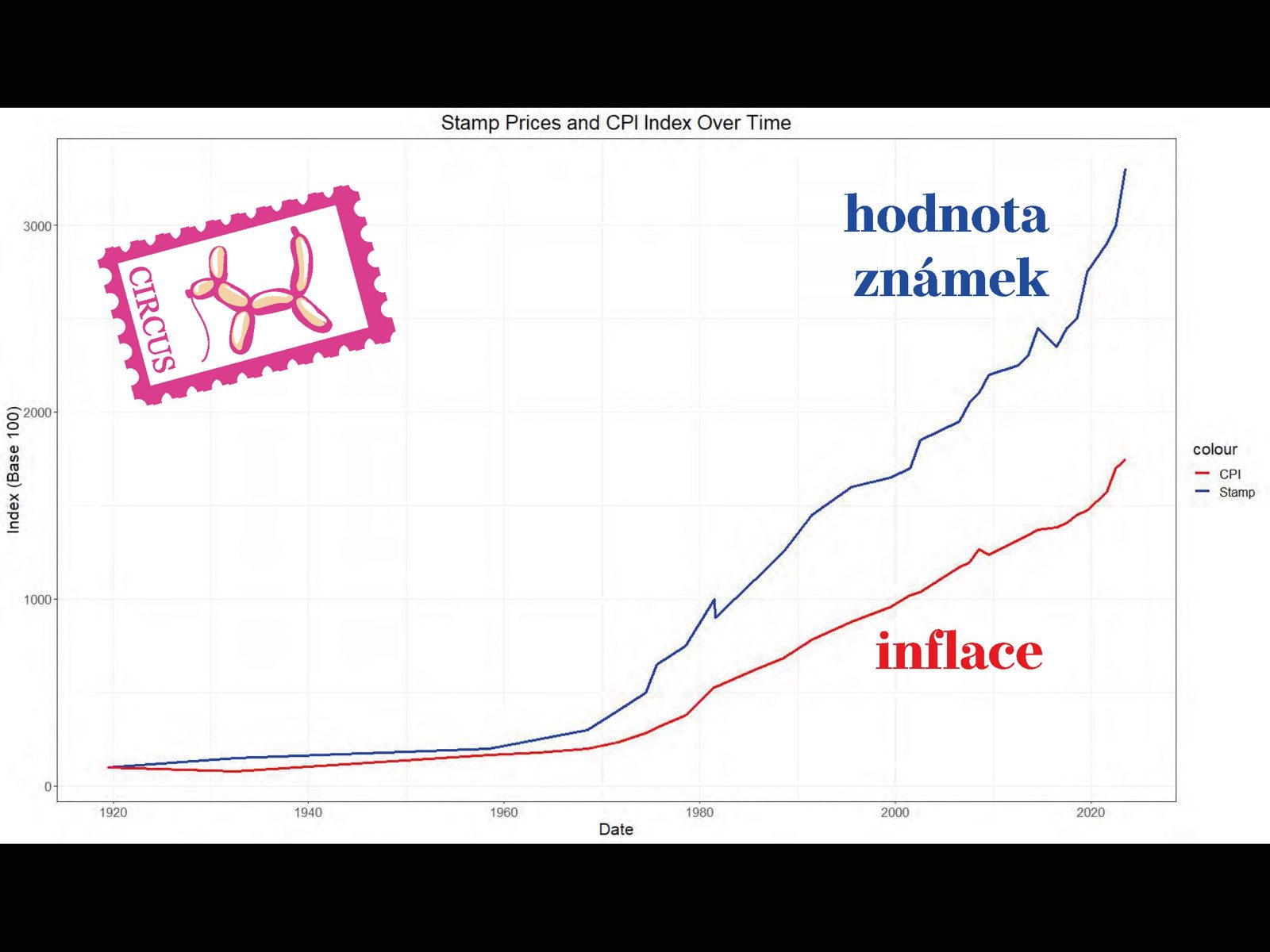
- For the less poetic souls, to round out the picture, I dug up a chart — the value of stamps over time compared with inflation.
- The house in our story is our church here — many of us feel at home here, after all. The grandson could be any one of us: because you can grow up in church your whole life, even leaf through the Bible now and then. And yet the beauty, value and meaning of the kingdom of God can escape us all our lives.
- That friend is waving and pointing — there's a treasure right under your nose!!! It's within reach. In our story he works a bit like the Parable of the treasure and the pearl itself.

Finishing the story
- We know that in the story of Grandad's postcards the grandson discovered a treasure — but it's far from certain how it will turn out.
- Maybe the grandson will never take the album to a stamp dealer because he never finds the time. Right when he discovered the treasure, it was already too late to drive anywhere. The next day, as if to spite him, it started raining, and the day after that he realised he was actually doing fine. The first season of Harry had just come out, the sofa was comfortable and the stamp dealer far away. He might have to go all the way to Hradec. And who knows — maybe the stamps aren't worth as much as his friend said anyway. I can't settle it now, and besides, I need a wee… Oh look, a fly.
- There are so many great things in life — like a new field, or a pair of oxen, or a wife (the selection isn't random — it's from the parable of the banquet) — that we can miss the invitation to the banquet altogether. We can spend our whole life swept along by smaller things that are, no doubt, good at heart.
- When Jesus says that whoever puts, say, family before him isn't worthy to be his disciple, it isn't that he's forbidding anyone to be a disciple. It's just that a person who doesn't have him as a priority simply gets carried away by many other things.
- It's like football. If you've got a sprained ankle, you can't play football. And it's not so much that anyone's forbidding you — it's just that you simply can't play with a sprained ankle.
- In the same way, Jesus isn't saying he forbids anyone to be his disciple. But if other things pull you more strongly, you just won't manage it, and the treasure will stay hidden.

We're not helpless
- But we can always decide to direct our mind to where it's good. We can decide where we put our attention and our prayers. We're not helpless. Scripture urges us repeatedly, in various words, to exactly this kind of cultivation…
- After all, two sisters once invited a whole gang of people over — the guests sat around the table and the food wasn't ready. The guests went hungry, the meat was burning in the pan, the potatoes were boiling to mush, the biscuits were burning in the oven, the dough was overflowing and dropping onto the floor — and one of the sisters nevertheless sat by one of the guests and listened carefully, because he was talking about the kingdom of God and nothing was more important at that moment.
Repetition — The pearl
- The parables of the treasure and the pearl differ in that in the first case it's a collision out of nowhere — the man stumbles on it by sheer chance. And that's how it happens — many have been swept towards God by exactly such a moment of God's presence, one that brings a person to their knees and lets them see with total clarity what Romeo saw when he talked with Juliet, or what the apostle Paul saw: I'll gladly give up my name and my old life, and it's no sacrifice at all compared with having you — no loss — it's pure gain.
- But that doesn't mean we should sit with our arms folded and wait for the thunderclap.
- For the seekers there's the parable of the Pearl. It tells of a person who searches doggedly — hungrily chews over every seed of God's word and deliberately cuts back the million other weeds, calls out to God and searches for the Pearl.
- With the Parable of the pearl Jesus says: keep on searching.
The merchant found it. You will find it too.
The treasure and the pearl · Mt 13:44–46 · 2026
More talks