Research: Waiting with empty hands
BACKGROUND FOR THE PAGE · OCTOBER 2026
A biblical and historical survey of the regular devotional practice in which a person stops speaking first · 27 sections with quotations and links
A biblical and historical survey of the regular devotional practice in which a person stops speaking first and makes room to receive — from Scripture to today. Every verified quotation has its source and link beside it; what could not be documented is marked. Section numbers follow the order of the searches, not chronology — the timeline is on the infographic page.
A biblical and historical survey of the regular devotional practice in which a person stops speaking first and makes room to receive — from Scripture to today. Background for a page on matyas-hajek.cz. Three rounds of searching (October 2026), 27 sections; every verified quotation has its source and address beside it. Items marked [VERIFY] could not be documented online and are either absent from the page or marked.
- The link is not silence but a posture: waiting with empty hands. Scripture has its own verbs for it (harpu, dumiyyah, hagah), which mean “let go” and “rest” rather than “be silent”.
- Everyone who practised it regularly used some anchor for attention: a single verse (Cassian), the name of Jesus with the breath (Climacus), a short text for a whole week (Benedict, Guigo, Bonhoeffer), a song (Tersteegen, Taizé), or shared silence (the Quakers, Azusa Street).
- The Protestant line is stronger than we in the Church of the Brethren think: Luther (when the Spirit preaches, be still), Calvin (singing is prayer), Comenius (the house of the heart), Tersteegen, Herrnhut (the watch and the Watchwords), the Quakers, Bonhoeffer, Kelly, 24-7 Prayer.
- Singing does the same as silence: it sets our own sentences aside and puts a prescribed, repeated prayer into our mouths. The oldest Czech song is a sung Kyrie.
- Pentecostal “tarrying” is a direct relative of Quaker waiting — right down to the sign “Do not speak louder than a whisper” in the upper room at Azusa Street.
- For all of them it is about rhythm (daily, twice a day, by the hour), not extraordinary experiences — and all of them insist at the same time that the result is a gift, not an achievement (Benedict, Teresa, Barclay).
- Limitations: the Czech wording of the verses was given from memory after the Czech Ecumenical Translation and has to be checked before publication (biblenet.cz); for several names (Fox, Penington, Baxter, Edwards, the 1501 hymnal) no direct source could be found online, so they are not on the page.
- The link is neither silence nor “emptying”, but waiting with empty hands: setting aside oneself and one's own worries so that room to receive opens up. Silence, short repeated prayer, Scripture (lectio), shared silence, singing and tongues are different TOOLS of the same posture.
- Regular practice (not extraordinary interventions). Positive examples. Singing as a category of its own. Pentecostals only positively and briefly (a separate page later).
- Ps 46:10 “harpu” (רפה rāfāh): imperative pl. — “slacken, let go, stop striving”; military context “lay down your arms”; followed by “and know (da'u) that I am God” — letting go serves knowing. Sources: evergrowingchristians.com/be-still-hebrew-meaning/ ; familybible.org/verses/psalm-46-10/ ; rethinknow.org/meaning-of-psalm-46-10/ . Kralice Bible “Be at rest”, Czech Ecumenical Translation “Enough!” [VERIFY the CEP/B21 wording].
- 1 Kings 19:12 qol demamah daqqah: qol = voice/sound; demamah = silence, calm (Job 4:16 “silence”); daqqah = thin, fine (dak = dust, Deut 9:21). NRSV “a sound of sheer silence”; KJV “still small voice”. Sources: en.wikipedia.org/wiki/1_Kings_19 ; workingpreacher.org (deClaissé-Walford) ; weekly.israelbiblecenter.com/what-did-elijah-hear . The Moses–Elijah parallel at Horeb.
- Ps 62:1 dumiyyah (דּוּמִיָּה): “silence, calm, quiet waiting” (Strong 1747 “a silence, a quiet waiting, repose”); Luther “Meine Seele ist stille zu Gott”; Gesenius: quiet reliance. Sources: biblehub.com/lexicon/psalms/62-1.htm ; biblehub.com/commentaries/psalms/62-1.htm ; studylight.org (Clarke: “Surely to God only is my soul dumb”). Also Ps 65:1 “to you silence is praise” [VERIFY].
- Further verses to work in (check the Czech wording): Ex 14:14; 1 Sam 3:9–10; Ps 1:2 (hagah); Ps 5:3; Ps 27:14; Ps 37:7; Ps 130:5–6; Ps 131:2; Prov 8:34; Eccl 5:2; Isa 30:15; Isa 50:4; Lam 3:26.28; Mic 7:7; Hab 2:1; Hab 2:20; Zeph 1:7; Zech 2:13; Mark 1:35; Luke 5:16 (habitual imperfect); Luke 10:39–42; Luke 2:19.51; Matt 6:6–8; Matt 11:28–29; John 10:27; John 15:4; Acts 1:14; Acts 10:9; Acts 13:2; Rom 8:26; 1 Cor 14:2.14–15; Eph 5:18–19; Col 3:16; Rev 3:20; Rev 8:1. Singing: 1 Sam 16:23; 2 Kings 3:15 (Elisha + musician → the hand of the LORD); 2 Chr 5:13–14; 2 Chr 20:21–22; Acts 16:25.
- Arsenius (354–449/450): a voice: “Arsenius, flee, be silent, be still (fuge, tace, quiesce) — these are the roots of sinlessness.” (Apophthegmata, Arsenius 1–2). Sources: orthodox-europe.org/content/desert-fathers-readings/ ; saintjameslancaster.org PDF ; patheos (Garrett). “I have often repented of having spoken, but never of having kept silent.” (desertfathers.blogspot.com).
- Abba Moses: “Go, sit in your cell, and your cell will teach you everything.” (quies.org/quies_pclc_sayings_desertfathers.php).
- Abba John: “To keep watch means to sit in the cell and to remember God constantly.” (saintjameslancaster PDF).
- Cassian, Conferences X,10 (c. 420): the formula “O God, make speed to save me: O Lord, make haste to help me” (Ps 70:1) — “for keeping up continual recollection of God this pious formula is to be ever set before you”; handed down by “a few of the oldest fathers”; the verse used in every state — in temptation and in success alike. Sources: newadvent.org/fathers/350810.htm ; ccel.org/ccel/cassian/conferences.ii.xi.x.html ; ldysinger.com (Latin: “Deus in adiutorium meum intende”). To this day it opens every hour of the breviary (benedictine-oblates.net PDF, Pluscarden).
- Nouwen, *The Way of the Heart* (1981) builds on Arsenius's triad: flight (solitude), silence, constant prayer (prodigalcatholic.com summary) [VERIFY the direct quotations].
- Robert Barclay, Apology (1676/78), Prop. XI (qhpress.org/texts/barclay/apology/prop11.html):
- §VI: “when they are assembled, the great work of one and all ought to be to wait upon God, and returning out of their own thoughts and imaginations… though there be not a word spoken, yet is the true spiritual worship performed… many meetings have been held without a word, and yet our souls have been greatly edified and refreshed.”
- §VII: “when I came into the silent assemblies of God's people, I felt a secret power among them, which touched my heart; and as I gave way unto it I found the evil weakening in me and the good raised up” — not by the strength of arguments.
- §IX: “our worship consisteth not in words, so neither in silence as silence; but in a holy dependence of the mind upon God, from which dependence silence necessarily follows in the first place, until words can be brought forth which are from God's Spirit”.
- §X: the image of pupil and master: whoever wants to learn must not keep talking; the image of a servant before a king — he is not to deafen the king with speeches “though they were his praises”; a biblical list of verses on waiting: Ps 27:14; 37:7.34; Prov 20:22; Isa 30:18; Hos 12:6; Lam 3:25–26; Isa 40:31 etc. “We are not against meditation”.
- §XXVI: singing psalms “sweet and refreshing, when it proceeds from a true sense of God's love in the heart”; a critique of formal singing as “lies in the sight of God” (singing Ps 6:6 without tears).
- Quakers.org / christianhistoryinstitute.org confirm the §7 quotation.
- [VERIFY] George Fox, letter to Lady Claypole (1658): “Be still and cool in thy own mind and spirit from thy own thoughts…”; Isaac Penington 1661 “Give over thine own willing…”; Caroline Stephen, Quaker Strongholds (1890); Thomas Kelly, A Testament of Devotion (1941).
- The Labyrinth of the World and the Paradise of the Heart (1623, printed 1631), ch. XXXVII “The pilgrim finds his way home” (labyrint.cz/cs/kapitola-37): a voice three times “Return!” … “Return whence you came, to the house of your heart, and shut the door behind you.” The pilgrim: “Gathering my thoughts as best I could, and shutting my eyes, ears, mouth, nostrils and all outward passages, I entered within, into my heart: and behold, it was dark there.” … in the little room “no rustle or clatter, no shrieking or crashing… but all silence”. Marginal notes: “The first conversion is God's work / The second requires our effort too.” Title page: “whoever, sitting at home in his heart, shuts himself in with the Lord God alone, he alone comes to true and full peace of mind and joy” (web2.mlp.cz).
- Ch. XXXVIII “He receives Christ as a guest” [VERIFY the quotations of Christ's speech], The Depth of Safety (Centrum securitatis, 1625) [VERIFY].
- Scala claustralium / The Ladder of Monks (c. 1150–1180; Guigo II, prior of the Grande Chartreuse, † c. 1188): four rungs “lectio, meditatio, oratio, contemplatio” — “Lectio inquirit, meditatio invenit, oratio postulat, contemplatio degustat” (reading seeks, meditation finds, prayer asks, contemplation tastes). The image of food: “reading puts solid food into the mouth, meditation chews and breaks it, prayer obtains its flavour, contemplation is the sweetness itself that gladdens and refreshes.” Matt 7:7: “Seek in reading and you will find in meditation; knock in prayer and it will be opened to you in contemplation.” Contemplation = “the mind lifted up above itself in God”. Regarded as the first description of methodical prayer in the West. Sources: ldysinger.com/@texts2/1180_guigo-2/02_lad_sel-lec.htm (Latin + English) ; ecatholic2000.com/guigo-ii/ladder-of-monks.shtml ; en.wikipedia.org/wiki/Guigo_II.
- The Ladder of Divine Ascent (c. 600), step 27 “On holy stillness (hesychia)”: “Let the remembrance of Jesus be united with your every breath — and then you will know the value of stillness.” Sources: nativityofchrist.net PDF (Selected sayings, transl. Lazarus Moore / Luibheid–Russell) ; thepocketscroll.wordpress.com ; ortodoxway.com. The earliest mention of the Jesus Prayer: Diadochus of Photike (c. 450) — en.wikipedia.org/wiki/Hesychasm. The Ladder has been read aloud in Orthodox monasteries every Lent for 1,400 years.
- A Simple Way to Pray (for Master Peter, the barber), 1535: “It often happens that in one petition I get lost in so many thoughts that I leave out the other six. When such rich good thoughts come, one should set the other petitions aside, make room for those thoughts, listen in silence and on no account hinder them. For there the Holy Spirit himself is preaching, and one word of his sermon is better than a thousand of our prayers.” And again at the Ten Commandments: “if in the midst of these thoughts the Holy Spirit begins to preach in your heart… be still and listen to him who can do it better than you.” Luther also: morning and evening, “with the Psalter in hand, I hurry to my little room”. Sources: churchonmill.org/s/21-A-Simple-Way-to-Pray-Martin-Luther.pdf ; caseyhough.com ; en.wikipedia.org/wiki/A_Simple_Way_to_Pray.
- The Practice of the Presence of God (conversations recorded by J. de Beaufort, publ. 1692): “The time of work does not differ with me from the time of prayer; and in the noise and clatter of my kitchen, while several persons are at the same time calling for different things, I possess God in as great tranquillity as if I were upon my knees before the Blessed Sacrament.” (4th conversation); “I did this not only at the appointed hours of prayer, but all the time; every hour, every minute, even in the midst of work, I drove from my mind everything that interrupted my thoughts of God.” He entered the Discalced Carmelite monastery in Paris in 1640 (other sources 1649/1666 — the date is uncertain), 15 years in the kitchen. Sources: gutenberg.org/cache/epub/5657/pg5657-images.html ; ewtn.com/catholicism/library/practice-of-the-presence-of-god… ; ministrymagazine.org 1981.
- “Gott ist gegenwärtig” (1729, Geistliches Blumengärtlein; EG 165, GL 387; Wesley's translation “Lo! God is here!”): stanza 1 “Gott ist in der Mitte. Alles in uns schweige und sich innigst vor ihm beuge.” (God is in the midst. Let all within us be silent and bow before him most inwardly.) Stanza 6/4 “Wie die zarten Blumen willig sich entfalten und der Sonne stille halten, lass mich so, still und froh, deine Strahlen fassen und dich wirken lassen.” (As the tender flowers willingly unfold and hold still to the sun, so let me, still and glad, catch your rays and let you work.) Stanza 7 “Mache mich einfältig, innig, abgeschieden, sanft und still in deinem Frieden.” (Make me simple, inward, withdrawn, gentle and still in your peace.) — a Reformed pietist (1697–1769), Mülheim; the hymn is still sung by Lutherans, Catholics and Mennonites. Sources: en.wikipedia.org/wiki/Gott_ist_gegenwärtig ; liederindex.de/songs/1470 ; kirche-im-wdr.de. A Czech translation in the Evangelical Hymnal? [VERIFY — a Czech version, Evangelical Hymnal no. 166?].
- 13 Aug 1727 the “Moravian Pentecost” at the Lord's Supper; on 27 Aug 1727 24 men and 24 women committed themselves to one hour of prayer a day — the “hourly intercession” (Stundengebet), which lasted over 100 years; the reason given was Lev 6:13 (the fire on the altar must not go out). Zinzendorf was 27. Sources: eternitynews.com.au ; Leslie K. Tarr, Christian History #1 (preceptaustin.org) ; en.wikipedia.org/wiki/History_of_the_Moravian_Church.
- The Daily Watchwords (Losungen): on 3 May 1728 Zinzendorf gave the congregation a “watchword” for the next day at the evening devotion; from then on someone went round the 32 houses of Herrnhut every day and talked about the verse with the families; the first printed edition 1731 (the title page quotes Lam 3:23 “new every morning”); today 50 languages, more than 1.5 million copies — the oldest daily devotional in the world. The Czech edition “Hesla Jednoty bratrské” is still published. Sources: moravian.org/2018/07/a-brief-history-of-the-moravian-daily-texts/ ; en.wikipedia.org/wiki/Daily_Watchwords.
- The community's official text: “Singing is one of the most essential elements of worship. Short chants, repeated again and again, give it a meditative character. Using just a few words they express a basic reality of faith, quickly grasped by the mind. As the words are sung over many times, this reality gradually penetrates the whole being. Meditative singing thus becomes a way of listening to God. It allows everyone to take part in a time of prayer together and to remain together in attentive waiting on God, without having to fix the length of time too exactly.” … “They can continue in the silence of our hearts at work… In this way prayer and daily life are united.” Three times a day everything on the hill stops; in the middle of every common prayer a long silence. Brother Roger (a Reformed Swiss) came to Taizé in 1940; music by Jacques Berthier (1923–1994), ostinato. Sources: taize.fr/en/songs ; taize.fr/en/prayer-and-reflection ; archives.taize.fr/en_article338.html ; reformedworship.org/resource/songs-community-taize.
- The Rule (c. 530), Prologue 1: “Listen, my son, to the master's instructions, and incline the ear of your heart.” (Obsculta… et inclina aurem cordis tui). Prologue 18: “Before you call, I will say to you: Here I am.” (Isa 58:9). Ch. 20 On reverence in prayer: “Let us know that we shall be heard not for our many words, but for purity of heart and tears of compunction. Therefore prayer should be short and pure, unless it be prolonged by the inspiration of divine grace.” Ch. 19,7: “let us sing in such a way that our mind is in harmony with our voice.” Sources: saintjohnsabbey.org/rule ; archive.osb.org/rb/show.asp ; abbeyvocations.org/rule-of-saint-benedict.
- The Life 8,5 (1565): “Mental prayer, in my opinion, is nothing else than an intimate sharing between friends; it means taking time often to be alone with him who we know loves us.” (quoted in the Catechism of the Catholic Church 2709). The Interior Castle IV,1,7: “the important thing is not to think much but to love much.” The Life: “I tried as hard as I could to keep Jesus Christ present within me… that was my way of prayer.” “It is good to seek greater solitude so as to make room for the Lord and let His Majesty do his work in us.” Sources: stjosemaria.org/between-friends… ; en.wikipedia.org/wiki/Mental_prayer (CCC 2709) ; catholic365.com. [Note: the 9 grades of prayer according to Aumann — quiet rest (the prayer of quiet) is an infused gift, not a technique.]
- Sayings of Light and Love, no. 100 (elsewhere no. 99 / Maxims 21): “The Father spoke one Word, which was his Son, and this Word he speaks always in eternal silence, and in silence must it be heard by the soul.” Further: “What we need most in order to make progress is to be silent before this great God with our appetite and with our tongue, for the language he best hears is silent love.” (no. 132) ; no. 28: “the knowledge of God is received in divine silence.” Sources: thirdordercarmelite.wordpress.com (full text) ; xaverianbrothers.org ; carmeldundee.co.uk.
- Ch. 9,18–10,20: “We pray always with continual desire… But at certain hours and seasons we also pray to God in words, so that by these signs we may admonish ourselves how far we have advanced in this desire, and may stir ourselves more keenly to its increase.” “Pray without ceasing (1 Thess 5:17) — what else does it mean but: without ceasing desire the blessed life?” §20: “The brethren in Egypt are said to have very frequent prayers, but very brief ones, shot off, as it were, like arrows (raptim quodammodo iaculatas), lest the watchful and alert attention that is necessary in prayer should evaporate and grow dull through long duration.” Sources: newadvent.org/fathers/1102130.htm ; blessedbegod.kazeo.com (Teske's translation) ; augnet.osa.org.au. (Pope Leo XIV recommended the letter, April 2026 — angelusnews.com.)
- A Testament of Devotion (1941; a Quaker, Haverford): “Deep within us all there is an amazing inner sanctuary of the soul, a holy place, a divine Centre, a speaking Voice, to which we may continuously return.” “We try to be several selves at once, without all our selves being organised by a single, mastering Life within us… Each of us tends to be not a single self but a whole committee of selves.” “There is a way of ordering our mental life on more than one level at once. On one level we may be thinking, discussing, calculating… But deep within, behind the scenes, we may also be in prayer and adoration, song and worship, and a gentle receptiveness to divine breathings.” “Not alternation but simultaneity — worship underneath every moment.” “Too many well-meaning people are so busy with the clatter of their efforts to do something for God that they do not hear him asking to be allowed to do something through them.” (Willard explicitly named Kelly as an influence.) Sources: medium.com/@markbrouwer/… ; goodreads.com/book/show/267213 ; goodreads author_blog_posts/24308117 (p. 9).
- Life Together (Gemeinsames Leben, 1938; Finkenwalde): ch. “The Day Alone”: “The Word comes not to the chatterer but to the one who holds his tongue. The stillness of the temple is the sign of the holy presence of God in his Word.” “Silence before the Word leads to right hearing and thus also to right speaking of the Word of God at the right time.” “Silence is nothing else but waiting for God's Word and coming from God's Word with a blessing.” “We are silent at the beginning of the day because the first word belongs to God; we are silent at the end of the day because the last word belongs to God.” Meditation: a short text, the same for a week if need be — “we are not preparing a sermon, we are waiting for God's word for us.” Three reasons for solitude: meditation on Scripture, prayer, intercession. “We must be ready to allow ourselves to be interrupted by God.” A letter of 1942: “The daily quiet meditation on the Word of God… is for me the crystallising point of everything that gives inner and outer order to my life.” Sources: thesimplepastor.co.uk/life-together-the-day-alone/ ; simon-phipps.com ; geochristian.com ; goodreads (Meditating on the Word).
- From Luke 24:49 / Acts 1:4 (“stay in the city until you are clothed with power from on high”) came the Pentecostal practice of tarrying = “waiting on God” (the terms were used synonymously). At Azusa Street (from 9 April 1906) there was a “tarrying room” upstairs with the sign “Do not speak louder than a whisper”; a hundred or more people of every colour waited there in prayer, sometimes for hours, sometimes for days. Bartleman: “Brother Seymour generally sat behind two empty shoe boxes… He usually kept his head inside the top one during the meeting, in prayer. There was no pride there… The people came to meet God — he was always there.” Apostolic Faith 1:5 (1907): “At Azusa Street it is a continual upper-room tarrying.” Seymour: “our highest place is down at his feet.” Sources: digitalshowcase.oru.edu (Society for Pentecostal Studies, “How long shall we tarry?”) ; revempete.us/research/holiness/azusa.html ; louismorgan.info/azusa.html ; zionchristianministry.com.
- Preface to the Genevan Psalter (Geneva, 10 June 1543): “Paul speaks not only of praying with the mouth, but also of singing. And in truth we know by experience that singing has great force and vigour to move and inflame the hearts of men to invoke and praise God with a more vehement and ardent zeal.” “The song must be neither light nor frivolous, but have weight and majesty (as St Augustine says).” Singing also “in houses and in the fields” as an “instrument of praise… to lift up the heart to God”. The Articles of 1537: psalms “in the form of public prayers… that the hearts of all may be roused”. Sources: ccel.org/ccel/ccel/eee/files/calvinps.htm ; spindleworks.com ; en.wikipedia.org/wiki/Genevan_Psalter.
- Directions for Singing (Select Hymns, 1761; still in The United Methodist Hymnal, p. vii): “IV. Sing lustily and with a good courage… V. Sing modestly. Do not bawl… strive to unite your voices together, so as to make one clear melodious sound… VII. Above all sing spiritually. Have an eye to God in every word you sing. Aim at pleasing him more than yourself, or any other creature. In order to do this attend strictly to the sense of what you sing, and see that your heart is not carried away with the sound, but offered to God continually.” Sources: hymnodytimeline.org.uk/?p=823 ; fulwoodmethodist.org.uk ; wesleybros.com.
- The oldest known Czech song (turn of the 10th/11th century; first mentioned in 1055 at the election of Spytihněv II; written down by Jan of Holešov in 1397; traditionally attributed to St Adalbert) — a paraphrase of the Kyrie eleison: “Lord, have mercy on us! / Jesus Christ, have mercy on us! / You, Saviour of all the world, / save us and hear, / Lord, our voices! / Give us all, Lord, / life and peace in the land! / Krleš! Krleš! Krleš!” (Krleš = Kyrie eleison). Eight lines without rhyme or stanzas; Charles IV in the coronation order, Hus in the Bethlehem Chapel. It is in the Czech Evangelical Hymnal (747) and the Catholic hymnal (930A). Sources: en.wikipedia.org/wiki/Hospodine,_pomiluj_ny ; czech.mml.ox.ac.uk/hospodine-pomiluj-ny ; evangelickyzpevnik.cz/pisen/4875 ; kancional.cz/930A.
- Chasing the Dragon (1980): after being baptised in the Spirit in Hong Kong she committed herself to praying in tongues “fifteen minutes a day by the clock” — “it still felt like an exercise to me”; before that: “Lord, I do not know how to pray or for whom… pray through me and lead me to the people who want you.” “After about six weeks I noticed something remarkable… I was talking about Jesus with people who wanted to hear. I had let God into my prayers, and it had a direct result.” The St Stephen's Society community to this day: the Bible together every day, then praying in tongues aloud. Sources: goodreads.com/en/book/show/801823 (quotations from the book) ; kingschurchedinburgh.org PDF ; womanalive.co.uk ; jakekail.com.
- The Way of the Heart (1981; the desert fathers for ministry today): three steps — solitude, silence, prayer. “Solitude is the furnace of transformation. Without solitude we remain victims of our society and continue to be entangled in the illusions of the false self. Solitude is the place of the great struggle and the great encounter — the struggle against the compulsions of the false self, and the encounter with the loving God who offers himself as the substance of the new self.” “First, silence makes us pilgrims. Secondly, silence guards the fire within. Thirdly, silence teaches us to speak.” Prayer = “standing in the presence of God with the mind in the heart”. Sources: reneeeliphd.substack.com (direct quotation) ; gerardwozek.substack.com ; abebooks.com (text from the cover).
- The Imitation of Christ III,2 “The truth speaks within without the noise of words” (1418–1427): “Speak, Lord, for your servant hears (1 Sam 3:9)… The children of Israel once said to Moses: Speak to us and we will hear; let not the Lord speak to us, lest we die. Not so, Lord, not so do I pray; rather with Samuel I humbly and earnestly beg: Speak, Lord, for your servant hears. Let not Moses speak to me, nor any of the prophets, but speak yourself, Lord God… They pronounce words, but they do not give the spirit; they speak beautifully, but if you are silent, they do not set the heart on fire… Let all teachers fall silent, let all creation be still before you: speak to me yourself.” III,1: “Blessed are the ears that catch the pulse of the divine whisper and heed not the whisperings of this world.” Sources: ccel.org/ccel/kempis/imitation/imitation.THREE.2.html ; gutenberg.org/ebooks/1653.
- The daily app of the 24-7 Prayer movement (Pete Greig; the movement began in 1999 with a continuous student prayer room), launched in Advent 2019. The rhythm P.R.A.Y.: Pause (be still) – Rejoice & Reflect (a psalm, Scripture) – Ask – Yield (surrender to God's will); the Lord's Prayer at midday, the Ignatian examen in the evening. Explicitly inspired by lectio divina. March 2026: 2 million downloads, 330–400 thousand monthly users, 50 million prayers in 2025. Sources: thathappycertainty.com/app-review-lectio-365 ; faith.tools/app/69-lectio-365 ; 24-7prayerusa.com/resources/lectio-365 ; lectio365.com.
- The Ignatian examen (Spiritual Exercises §43 — five steps: thanks, a request for light, a review of the day, sorrow, resolution) — generally known; one can refer to Lectio 365 (the evening examen).
- George Fox, letter to Lady Claypole 1658 (“Be still and cool in thy own mind…”); Isaac Penington; Puritan meditation (Baxter); Edwards in the fields; Augustine, Confessions IX,6 on singing; The Way of a Pilgrim; the Unity's hymnal of 1501 (the first printed hymnal in a vernacular); Tersteegen in the Czech Evangelical Hymnal; the Watchwords in Czech (hesla.dulos.cz).
- Augustine, Letter 130 to Proba (412): the short “shot-off” prayers of the Egyptian brethren; Confessions IX,6 and X,33 on singing.
- Thomas à Kempis III,2 (“Speak, Lord, for your servant hears”).
- Teresa of Ávila: The Life 8,5; The Way of Perfection 26 and 28; John of the Cross: Sayings of Light and Love 100 (“one Word… in eternal silence”).
- Brother Lawrence: 4th conversation (“the time of work does not differ with me from the time of prayer… in the noise of the kitchen”).
- Ignatius: the examen (Spiritual Exercises §43).
- Luther, A Simple Way to Pray (1535): “when the Holy Spirit begins to preach… be still and listen”.
- The Puritans (Baxter, The Saints' Everlasting Rest IV); Edwards, Personal Narrative.
- Tersteegen, “Gott ist gegenwärtig” (1729): “Alles in uns schweige”; Zinzendorf, the Herrnhut hourly prayer watch of 1727; the Watchwords (Losungen) since 1731 — in Czech to this day.
- Singing: Calvin, preface to the Genevan Psalter 1543; Wesley, Directions for Singing 1761; Taizé — meditative singing (taize.fr); “Hospodine, pomiluj ny” (10th/11th c.); the Unity's hymnal of 1501; Bonhoeffer, Life Together (singing in unison; meditation at Finkenwalde).
- 20th–21st c.: Kelly, Tozer (The Pursuit of God — quotation via dialinministries), Nouwen, Willard (silence and solitude), Foster, Peterson (Eat This Book), Barton, Comer; Lectio 365 (24-7 Prayer, 2019), Pray As You Go (the Jesuits, 2006).
- Pentecostals positively: “tarrying” (Luke 24:49) at Azusa Street 1906 (Bartleman); Jackie Pullinger — 15 minutes of tongues a day; 1 Cor 14:2.14; Rom 8:26.
More infographics
 Expecting God’s touch in prayer — or not?Based on Teresa of Ávila, Lewis, Vácha and Pew surveys2×
 Prayer: The Interior CastleAfter Teresa of Ávila
 Inner prayerAfter 137 tips from Teresa to Bonhoeffer
 Models of prayerAfter Luther, Teresa of Ávila, Lewis and eighteen others2×
 Waiting with empty handsAfter Scripture and two thousand years of practice

 Prayer: The Game with MinutesAfter Frank C. Laubach
 Frequency of prayerAfter the pilgrims of the Interior Castle
 Two mentalities: Shalom vs. EmpireBased on the Bema podcast
 Chiasm: Treasure huntBased on the Bema podcast
 The kingdom of God: Map and timelineBased on the Bema podcast and MH
 Map of the disciplinesAfter Dallas Willard
 D. Willard: Renovation of the HeartBased on Renovation of the Heart
 D. Willard: Hearing GodBased on the book Hearing God
 Keller: Prayer — toil or delight?Based on the book Prayer
 C. S. Lewis on prayerBased on Letters to Malcolm
 N. T. Wright on prayerBased on the book The Lord and His Prayer
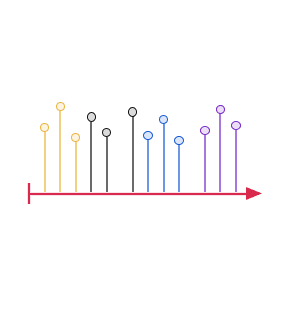 The Minor Prophets: Twelve voicesBased on the Bema podcast
 The Gospels: Four voicesBased on the Bema podcast2×
 Straying and seekingAfter the testimonies of fourteen pilgrims
 The quiet revivalBased on The Quiet Revival2×
 T. Merton: Created for a supernatural lifeBased on The Seven Storey Mountain
 Groups of Jesus' dayBased on the Bema podcast