TALK · 2024
Apostolic street evangelism
What the good news of the kingdom of God actually is — a timeline, a map of the territory, and the crowds forcing their way into the kingdom.
Sources
Bema podcast
- thanks, Vítek!
- a rabbi-trained Jewish teacher unpacks the Christian message of Scripture with a special emphasis on its roots
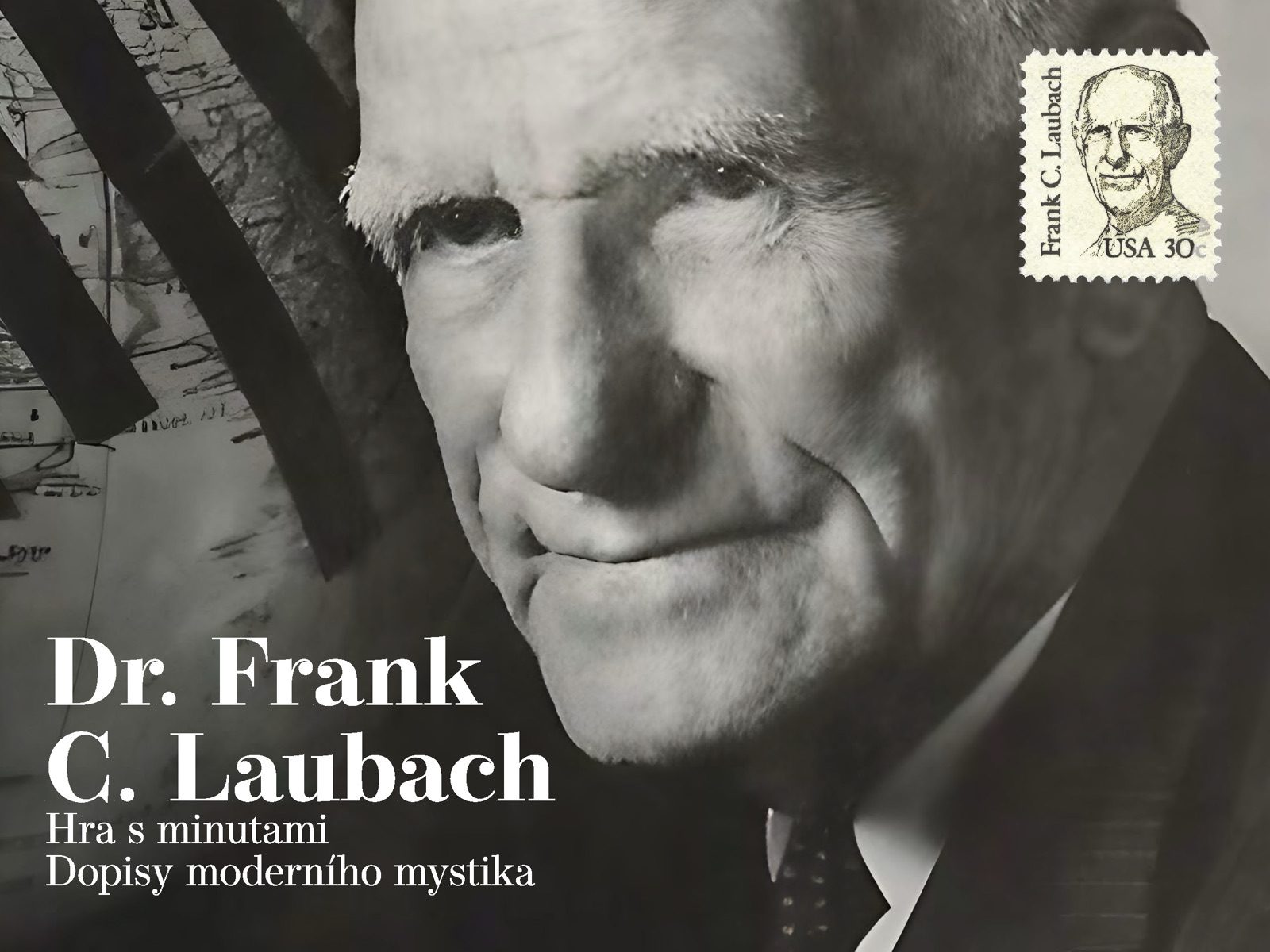
Frank Laubach
- 60 million people learned to read and write thanks to him — he was a missionary among illiterate Muslims in a remote part of the Philippines and created a system by which such people could teach each other to read and write, so that literacy would spread. Hence, presumably, the American postage stamp.
- he had a hard and dangerous job, and on top of all that he was a modern mystic. His texts are tiny and breathtaking. Letters by a Modern Mystic — I’ve been coming back to them every day for a few weeks now. Nothing has been published in Czech, though. It’s a disgrace.



Scripture
He called his twelve disciples to him and gave them authority over unclean spirits, to cast them out and to heal every disease and every sickness. … These twelve Jesus sent out with the following instructions: “Do not go among the Gentiles and do not enter any town of the Samaritans; go rather to the lost sheep of the house of Israel. Go and proclaim that the kingdom of heaven is at hand. Heal the sick, raise the dead, cleanse the lepers, cast out demons; freely you have received, freely give. Do not take any gold, silver or copper in your belts; take no bag for the journey, nor two tunics, nor sandals, nor a staff, for ‘the labourer deserves his wages’. Whatever town or village you enter, find out who in it is worthy, and stay there until you leave. When you enter the house, say: ‘Peace be with you.’ And if they are worthy, let your peace come upon them. If they are not worthy, let your peace return to you. And if anyone will not receive you or listen to your words, leave that house or town and shake the dust off your feet.
Matthew 10:1–14
Street evangelism
- A fortnight ago we were at a youth conference with Klub Up, and I went along to a workshop called “How to share the message about Jesus without it being weird”. And even though the title itself is weird, the workshop pleasantly surprised me — so out of the 70 participants in the theory part, I ended up being one of the four who plucked up the courage to join the practical part in the park, where we stopped to talk with three local teenagers. And it was a pleasant, deep and pretty unforgettable conversation.
- I mention this at the start because the passage from Matthew bears a striking resemblance to street evangelism — and an all the more “invasive” kind, since the assignment involves not just having a chat with someone, but moving straight in with your listener, and not even taking a change of clothes or a toothbrush with you, because that will surely be provided by the host himself 🙂
- I say that with a bit of exaggeration — Middle Eastern society back then was built on hospitality, and prophets, teachers and their disciples didn’t shut themselves away in buildings with their message — passing it on was a much more public affair. What’s more, practically every man had the personal memory of going to learn the Torah by heart as a boy, and 99.9% of them at some point heard from their teacher: “you have not been chosen to continue your studies”. Those who made it through were the absolute elite — so even though they were, in theory, only students, it could be an honour to put them up and hear what they had learned from their rabbi. These students were all the more interesting because they had been given the power to cast out demons and heal every disease.
- My first question is: what was this good news that John the Baptist proclaimed, then Jesus, then the disciples, and now us? Scripture suggests their task was to proclaim that the kingdom of God is within reach. And what does that mean?
- First I’ll present the Good News to you a bit technically, on a timeline, then on a map of the territory, and then in Scripture.
Timeline
- The Jews had two main teachings about the last days.
- The first concept expects the coming of the Messiah, and with him an immediate, dramatic change. Some think that John the Baptist, who asks Christ through messengers “so, are you really the Messiah we’ve been waiting for?”, may have been expecting precisely this radical change.
- The second concept is gradual. Jesus compares the kingdom of God to a mustard seed, which is tiny but grows little by little. Likewise the yeast, which gradually works through the whole batch of dough.
- The good news here is: it has already begun! It’s already here!
- So that was the timeline — let’s take a look at the territory.




Map of the good news
Every kingdom has its borders, and within those borders lies the territory where the king rules — where things happen according to his will.
When a king gains new territory, on paper he owns it immediately, but it takes a while longer before he travels through the new territory and establishes his rule and will there as well.
Put simply, God’s rule and will are fully in force in heaven — but in the Lord’s Prayer we pray “your will be done, on earth as it is in heaven”, asking for God’s kingdom to expand here to earth as well.
At the very beginning of the Bible we’re told about a time when God’s kingdom was in force even where humans lived — and those were golden times. Paradise on earth. That’s how it was meant to be, and the whole of history is the history of salvation, in which God prepares a rescue plan for humanity.
I don’t know whether anyone can be satisfied with the world as it is — in any case, the news that the kingdom of God is within reach and, to some extent, already here on earth is genuinely good news. In Greek: euangelion — gospel. This good news that the kingdom of God has come near was cried out by John the Baptist, then Jesus, then the disciples, and then us.
Along with it comes “repent” — turn away from the way you’ve been living! There is a new king. Become his disciples, who lovingly ponder the values of God’s kingdom and learn them, so that they can be good ambassadors of God’s kingdom here on earth.
That’s roughly the message the disciples proclaimed. The kingdom of God is coming near.








An abstract concept?
It might seem that the kingdom of God is an abstract idea fit only for zealots and mystics — but the opposite is true!
In Matthew 11:12, Jesus looks back at how his project of spreading the news that the kingdom of God is within reach is going, and says a strange sentence:
From the days of John the Baptist until now the kingdom of heaven has suffered violence, and the violent take it by force.
Matthew 11:12
“From the days of John the Baptist until now” — so during Jesus’ ministry there are some violent people forcibly grabbing at the kingdom of God. Who are these violent people? Can you actually get into the kingdom of God by force?
The same word, “violence”, appears in the story of Tamar — in the story of the birth of her twins. During the birth, Zerah put his little hand out first, and the midwife immediately tied a scarlet thread around it so it would be clear who the firstborn was. But the hand pulled back, and the little one without the thread on his hand forced his way into the world first. He was given the name Perez, which means “breach”, “the one who broke through”. Yes — Perez pushed his way right into the family line of King David and, above all, of King Jesus. Here we have the word that denotes the fierceness with which Perez fought his way into the world.
Or you can picture a sheepfold gate opening — and the sheep excitedly leaping over each other and bumping into one another to pour out onto the pasture. It’s a whole crowd of them!
So who was it that was pushing their way into the kingdom of God by force like that?
The image of the gate
As an answer, I have in my head the picture of a gate, in front of which stand those zealous Pharisees who devoted their whole lives to Scripture. They stand before the gate to the kingdom of God and are unable to go in. So they stand off to the side, getting worked up at Jesus that this is definitely not what the gate to the kingdom of God looks like — and they would know, because they’re the experts on these things: they’ve been preparing for it all their lives and have a precise idea of what the gate to the kingdom of God looks like.
And as they stand there blocking the way, suddenly the very dregs of society at that time come running past them — people who not only lack their solid knowledge of Scripture but often aren't even allowed into the temple: people unclean because of illness, sell-out tax collectors despised by everyone, prostitutes. All these outcasts shoulder open the gates of the kingdom of God at full tilt and pour inside. There are crowds of them!
The Gospels are full of stories like that!
Remember:
- a paralysed man breaks a hole through the roof to get to Jesus
- a prostitute pushes her way into the house of a respected Pharisee to interrupt a dignified debate and, in tears, wash Jesus' feet with expensive ointment
- a woman who has suffered from bleeding for years — and so couldn't go to the temple and by law had to keep away from people — pushes through the crowd in defiance of every rule, touches Jesus' cloak and is healed
- the gate of the kingdom of God is even burst open by a wild man who lived in caves and tombs and had been driven completely out of his mind by demons
- shouldn't the tax collectors have felt so sinful that they wouldn't even go near Christ? Quite the opposite — they're drawn to him like flies to flypaper!
The kingdom of heaven suffers violence, and the violent take it by force!
I know nothing…
My next question is: how much knowledge and learning do you need to force your way into the kingdom of God?
The answer is: a heart full of repentance and longing for Christ — and, quite often, a head that's completely empty.
If a reporter went up to that prostitute and did a doctrinal interview with her, how many of the questions would she know the answer to? Could she answer questions like: what is salvation, sin, conversion, being born again, holiness, baptism? The reality is that to be a believer, all you need is to know that Christ is what it's all about — and to go after him and seek him. You don't have to have theological questions and terms sorted out yet, and you may not even have the good news itself figured out. The doctrine comes gradually — there's time for that.
All the people I've mentioned barged into the kingdom of God, and at that moment they probably knew more about Christ's forgiveness and love than many a Pharisee. They had experienced his forgiveness and rescue first-hand. If you agree, with your permission I'd stick the label “Christians” on them. If that label doesn't belong to them, then who else does it belong to?
On the one hand, it's beautiful how accessible the kingdom of God can be. On the other hand, it can quite easily happen that we have a house full of Christians, yet hardly anyone has a clue what the gospel is — what the good news actually is. And yet we're supposed to be able to give an answer to anyone who asks.
It matters
Does the content matter? Does it matter how we phrase the good news?
Dallas Willard declared that the fundamental problem with the state of the church is precisely how we phrase the good news — to ourselves and to others. That the gospel, as we often tell it, produces fruitless, passive Christians who can have the most disastrous character imaginable and still assume that, unlike unbelievers, they're home and dry.
Let me try to set out two caricatures of the good news, as Dallas Willard sketched them. Two half-truths which — when they pass themselves off as the whole truth — become untruths. At least that's how N. T. Wright puts it.
The social gospel
- effectively crosses out anything supernatural
- it doesn't much matter which religion you follow
- it's mainly about the oppressed and the poor
- it treats Jesus as one of many inspiring moral figures
- Tim Keller planted a church in New York because most of the churches there were of this type
But that's desperately thin. Crossing out anything supernatural is pretty hard to sustain when you're a disciple of someone who claims to be the Son of God and backs it up with one miracle after another. The disciples most certainly didn't preach a social gospel.
The conservative gospel
And what about the conservative gospel? Imagine the disciples heading out into the towns with this message: “Our God is an angry God, but we've got the solution for you! Jesus will die for you, and thanks to that you won't go to hell! The good news is that we're offering you a way to settle your sin.”
The reaction of the people around them would most likely have been:
- first of all, our God is above all loving and gracious. Anger is a natural reaction when someone is destroying God's beautiful creation and tormenting others. But that doesn't make God an angry despot.
- our sin isn't left unresolved — we have the temple, God's law concerning sacrifices and God's grace
- the messiah is certainly not going to die
- and what is hell anyway — the whole Old Testament knows nothing of the sort
We can agree that this isn't what the good news carried by the disciples sounded like. It's only part of the truth:
- it paints God as an angry despot, not as a loving creator who rescues his creation
- for this version, the death on the cross — the payment for sins — is really all it takes; but what about the resurrection and the ascension into heaven, to the throne?
- it doesn't lead people into discipleship. It's just about holding a ticket to heaven, and life here and character don't matter. Jesus didn't call for tickets to heaven to be handed out. He called people to discipleship — he wanted representatives of his kingdom who would spread the love and justice of the kingdom of God around them.
This message certainly wouldn't have sounded to people like a drink of fresh water. The good news isn't about fear. Yes, sin destroys everything and everyone and we need God's help with it, but the Good News doesn't revolve solely around sin. That's not enough.
Conclusion
Recap on the slides:
- this is the good news
- this is what we're waiting for and looking forward to
- this is our place and our task
A few conclusions
- Most people have never heard the good news — that's the reality. And plenty of them would be far more grateful to you for a message like that than for “small talk”, i.e. chatting about the weather and so on.
For many people the good news is foolishness. But for some of those who hear it, something happens! The message — the royal announcement — does them good, like a hot drink on a cold day… It refreshes them. It gives them energy. Sometimes it even heals them of physical ailments. Suddenly they feel a sense of wonder growing somewhere inside them, along with an awareness that someone loves them. It's a bit like someone who has been completely deaf since birth suddenly hearing the opening of a Mozart symphony after a successful operation. All at once a whole new world opens up to them, one they could never have imagined before.
N. T. Wright: Simply Good News — pp. 28–37
- It's important to be able to put the good news into words, and not to settle for the social or the conservative gospel.
- The best mission is the disciple's own life.
- And above all: if we ourselves don't know the good news of the kingdom of God, and it feels to us like something foreign and distant, some abstract concept rather than a refreshing drink of water on a sweltering hot day, then there's a simple piece of advice: seek the kingdom of God.
- And let's remember those who forced their way into the kingdom of God! In repentance and on their knees.




The final word: Frank Laubach
I'll let Frank Laubach have the final word — I think he captures the reality of life in the kingdom of God best. He was a missionary who was well aware that among the Muslims in the Philippines, the local imams had no reason to let him talk to people. But he decided that he would draw so close to God and settle so firmly into God's kingdom that his faith would become irresistible to others. And sure enough — in the end the imams themselves sent locals to him whenever they wanted to know more about God.
His main tool for drawing closer to the kingdom of God was the Game with Minutes. He trained himself to fix his attention on God every single minute. It sounds unbelievable, but he really did write a booklet on how it can be learned. It's a bit demanding — but if you got into the habit of turning your inner gaze to God for two seconds at least every time you switch activities, or whenever it's at all possible… So often we just rattle off our prayers and never once fix our attention on God for the whole of the prayer. Well, this is the exact opposite. In his letters Frank Laubach reveals the results of his experiment:
“Day by day the feeling grows in me that one invisible hand is holding me and guiding me, while another invisible hand reaches out ahead and prepares the way. … I'm playing my part in a plan that goes far beyond me. This sense of working together with God in the small things amazes me so much, because I have never felt it like this before. I need something, I turn round, and I find it already waiting for me, ready.
Of course I have to work, but God works together with me. Being aware of this gives me a sense of security and assurance for the future, which is also new to me.
It seems that now I only have to look after one thing, and everything else ‘takes care of itself’ — or rather, and this is truer, God takes care of everything else. My task is to live this hour in constant inner conversation with God and in perfect responsiveness to his will. To fill this hour with the glory of God. That, it seems, is the only thing I have to think about.”
Frank C. Laubach: Letters by a Modern Mystic
Amen.
Apostolic street evangelism · 2024 · based on the teaching of the Bema podcast
More talks